COMPARATIVE ANALYSIS: MODELS OF THE INTERNATIONAL SECURITY IN THE CONTEXT OF DIGITAL TRANSFORMATION
(State-Centric Technological Model vs. Polycentric Digital Institutional Model)
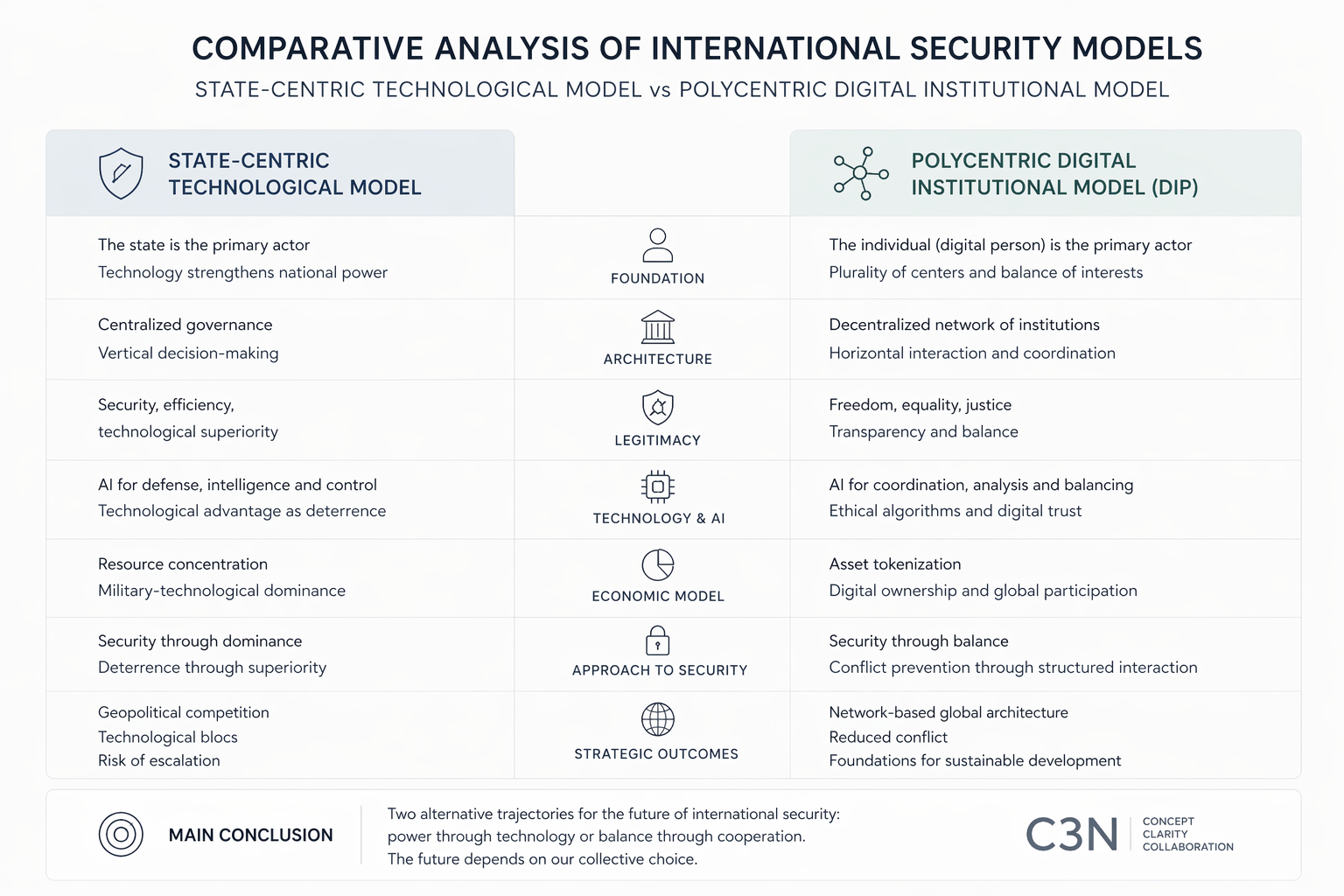
Introduction
In the contemporary global discourse, increasing attention is being paid to the transformation of the international security system under the influence of technological development. In particular, the manifesto of Palantir Technologies — “Technological Republic”, presented by Alex Karp, articulates an approach in which technologies are viewed as a key instrument for ensuring state power and geopolitical stability.
At the same time, an alternative conceptual model is emerging, based on the Digital Institutional Platform (DIP) and polycentric institutions, which proposes a different logic for organizing security — through the balance of interests, digital sovereignty of the individual, and network-based interaction.
This document presents a comparative analysis of these approaches as two strategic trajectories for the development of the international system.
1. Conceptual Foundations
State-Centric Technological Model
- Primacy of the state as the key subject of international relations
- Technology as an instrument for strengthening national security
- Based on the logic of competition and deterrence
Polycentric Model (DIP)
- Recognition of the human being (digital person) as the fundamental subject
- Plurality of decision-making centers (polycentric institutions)
- Orientation toward balance, interaction, and conflict prevention
2. Architecture of the Security System
State-Centric Model
- Centralized governance structure
- Integration of technology companies with state institutions
- Vertical coordination of decision-making
DIP
- Decentralized network of institutions
- Horizontal mechanisms of interaction
- Digital institutional platform as a coordination environment
3. Sources of Legitimacy
State-Centric Model
- Provision of security
- Governance efficiency
- Technological superiority
DIP
- Freedom, equality, and justice
- Transparency of processes
- Balance of interests among all participants
4. Role of Technology and Artificial Intelligence
State-Centric Model
- Use of AI in defense, intelligence, and control
- Technological superiority as a tool of deterrence
DIP
- AI as a tool for coordination, analysis, and balancing
- Implementation of ethical governance algorithms
- Building trust through digital mechanisms
5. Economic Model
State-Centric Model
- Concentration of resources within state programs
- Dominance of the military-technological complex
DIP
- Tokenization of assets
- Digital ownership
- Participation in global economic processes through the platform
6. Approaches to Security
State-Centric Model
- Security through dominance
- Deterrence through technological superiority
DIP
- Security through balance
- Conflict prevention through structured interaction
7. Strategic Implications
State-Centric Model
- Intensification of geopolitical competition
- Formation of technological blocs
- Risk of conflict escalation
DIP
- Formation of a network-based global architecture
- Reduction of conflict intensity
- Preconditions for sustainable development
Conclusions
The comparative analysis demonstrates the existence of two alternative approaches to the future of international security: a state-centric approach based on the strengthening of power through technology, and a polycentric approach focused on the balance of interests and a new institutional architecture.
In this context, the development of digital platforms and polycentric mechanisms may serve either as a complement to existing international institutions or as a foundation for a new system of global interaction and digital democracy.
Purpose of the Document
- Supporting strategic dialogue among states
- Assessing new approaches to international security
- Identifying opportunities for institutional development in the context of digital transformation
- Facilitating engagement of innovators, visionaries, and institutions in the formation of the International Security and Sustainable Development Fund